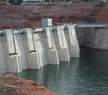
A barrage of reports and media advisories continue to come forth from scientists about the persistent drought in the Colorado River basin. The public has been reminded that the region experienced droughts of similar intensity before, notably 1901-1904 and 1953-1956. However, the year of 2002 was singled out as the driest year ever in recent history.
While common forecasting techniques allow for predictions of 3 to 6 months, scientists are beginning to observe two patterns of sea surface temperatures that provide a degree of confidence in predicting long-term droughts, notably the warming of the North Atlantic ocean with the cooling of the tropical Pacific ocean.
By obtaining tree ring data, scientists have reconstructed the climate of past centuries with tested credibility. The analyses of both instrumental and tree ring precipitation records should allow scientists to project drought conditions beyond a mere seasonal forecast. By comparing the data sets, the analyses demonstrate that a drought can persist for one or two decades and, in a few cases, even longer. Additionally, the data can be linked with the aforementioned ocean temperatures and thus provide the indicators necessary to forecast a persistent drought.
In 1998 observers were prompted to anticipate the current drought situation and the conditions remain unchanged and will likely persist into the coming decade. “In the context of shifting ocean climate, the current drought should give water and other resource managers in the Rockies and Southwest little cause for optimism about the drought ending any time soon,” said Julio Betancourt of the US Geological Survey.
In a recent report Betancourt and others stated the implications, “It is always prudent to be conservative about water and other resources vulnerable to drought; it is particularly prudent now. ...Societal demands on surface water are on the increase. ...Clearly, the context for long-term drought is different now than it has been in the past.”
PDF Version Download
Stephen T. Gray .et .al
Patterns and sources of multidecadal oscillations in drought-sensitive tree-ring records from the central and southern Rocky Mountains