Scientists meeting in Tucson this past October were criticized by the Department of the Interior for expressing little confidence in federal efforts to mitigate the downstream impacts of Glen Canyon Dam operations on the Colorado River ecosystem in Grand Canyon National Park.
“Advocacy positions belong to lawyers,” said assistant Secretary of the Interior, Bennett Raley, to the assembled scientists, many who have expressed frustration that their research is being ignored.
Dr. Jack Schmidt, a geologist who’s worked in Grand Canyon for 15 years, stressed that scientists have done their jobs well in reporting accurately to Interior’s Adaptive Management Working Group (AMWG) and then asked, “When is AMWG going to act upon this knowledge?”
Raley stated that Interior could “drag it’s feet” if it did not like what was being recommended. Raley, a water attorney by profession, who has asked Congress to repeal the Endangered Species Act, openly advocated to the scientists the concerns of water and power suppliers, and that these interests maintain superior political and legal positions as compared to environmental interests. He argued that the Grand Canyon Protection Act should be subservient to prior Colorado River laws, and river management policy should therefore follow such a doctrine. Nonetheless, scientists should “continue to support” the adaptive management process.
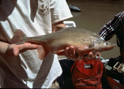
Dr. Richard Valdez, a senior researcher of endangered fish, gave strong recommendations to AMWG concerning the endangered Humpback Chub by saying, “If you are not going to address the threats to their critical habitat, then you will continue to have endangered species in Grand Canyon.” Humpback Chub populations have declined 75% to just 2,000 adult fish over the past eight years.
Although this gathering was organized specifically for AMWG, very few of its members actually attended. The program is presently facing increased criticism as it was established to recover endangered species in Grand Canyon, but native species diversity has actually declined under their management.
Hydrologist William Vernieu reported on the impacts of drought on Lake Powell reservoir and the downstream implications for Grand Canyon’s water chemistry, which has so far been ignored by AMWG. The reservoir is currently experiencing a decrease in available oxygen along with increases in phosphorus, nitrates and salt. Such changes in water quality will exacerbate the decline in the river’s native food base for endangered fish.
The meeting illustrated that the political situation regarding Grand Canyon’s management is deteriorating as rapidly as its ecology. Several scientists admitted privately that absent some form of litigation, there will be little chance of recovering the natural and cultural heritage of Grand Canyon before these resources are lost forever as a result of operations at Glen Canyon Dam.